





Framed Prints From Fine Art Finder
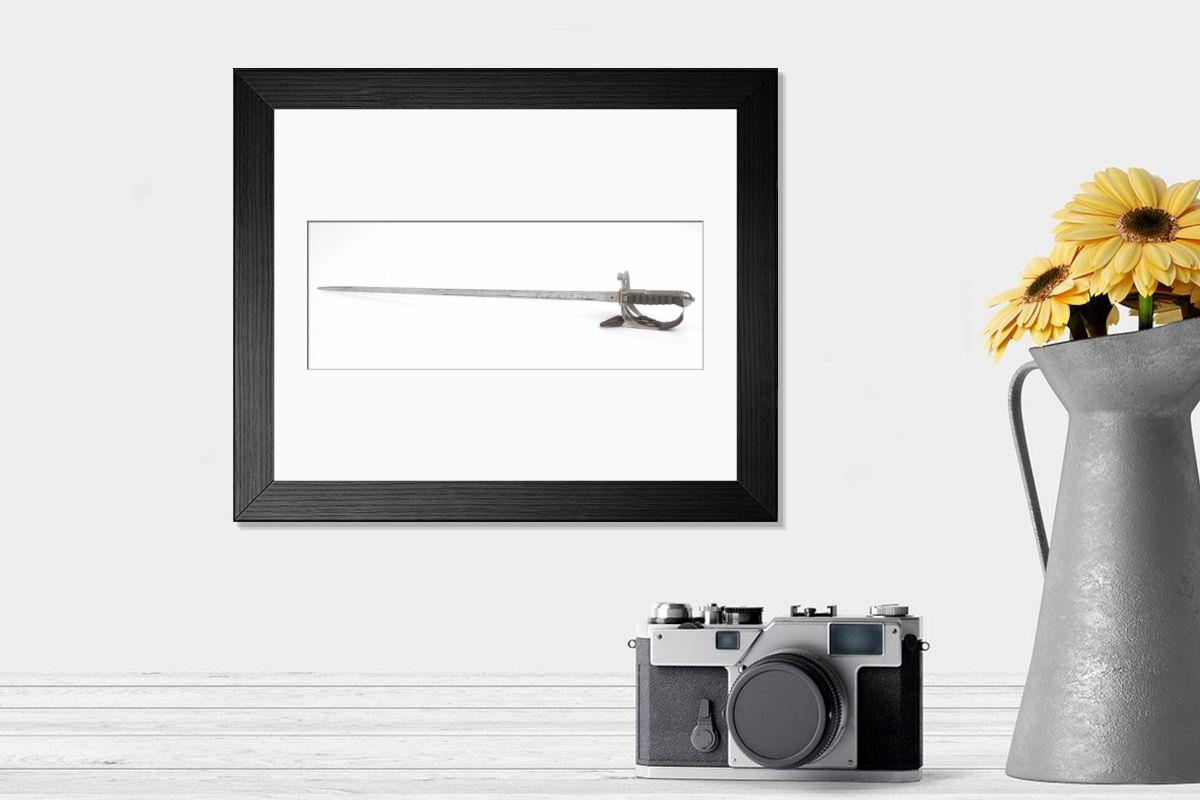
Framed Print of Pattern 1854 sword, Lieutenant Walton Thomas Cecil Fogg-Elliot, Welsh Guards (sword, foot guards, pattern 1854)
NAM5928945 Pattern 1854 sword, Lieutenant Walton Thomas Cecil Fogg-Elliot, Welsh Guards (sword, foot guards, pattern 1854) by English School, (20th century); National Army Museum, London; (add.info.: Pattern 1854 sword, Lieutenant Walton Thomas Cecil Fogg-Elliot, Welsh Guards.
Walton Fogg-Elliot served with the 3rd Battalion, The Welsh Guards during the Second World War (1939-1945). He was killed in action in fighting around Perugia, Italy on 21 June 1944, aged 26.
The 3rd Battalion, The Welsh Guards had arrived in Italy in February 1944. It was swiftly deployed to positions against the German's formidable Gustav Line. Here it experienced bitter mountain warfare on Mount Cerasola and the grim battle in the ruined town of Cassino. When the Allies finally broke through the Gustav Line in May, the Welsh Guards were incorporated into 6th Armoured Division and tasked with exploiting the breakout and driving the Germans back northwards.
Perugia was an important town on their line of advance and the Division arrived in the area in mid-June. The town was cited on the southern edge of a ridge of high ground to the east of Lake Trasimeno. By nightfall on 19 June important ground surrounding Perugia had been taken and the Germans were compelled to withdraw from the town into the hills to the north. The following day, the Welsh Guards, working in concert with tanks of the 16th/5th Lancers, were ordered to advance beyond the town to capture the village of San Marco, two miles to the north.
The fight for San Marco raged most of the day. The battle took the form of a series of vicious actions against small, widely dispersed and determinedly held fortified positions which were supported by shell fire from the surrounding countryside. By four o'clock the village had been secured and No.4 Company, under Captain F L Egerton, was then tasked with occupying Montione Hill, a mile to the north west. The Company succeeded in establishing itself on the summit, but the surrounding country was still thick with enemy troops and this made their position highly precarious. That night, the Company's reserve platoon set out from the village to bring them up supplies, but, on encountering resistance, was forced to abandon the attempt and dump the supplies at random on the hillside. These were fortuitously found by the men of 4 Company the next day.
Unaware that the supplies had in fact got through, Battalion HQ presumed 4 Company's situation to be desperate and resolved to make another attempt the following day. To this end, a party led by Fogg-Elliot and Captain J R Roberts was dispatched to try and make contact. To avoid the enemy that the previous party had encountered Fogg-Elliot led his men on a more circuitous route, but this was to no avail and they still encountered fierce resistance from an enemy position at the base of the hill. In the ensuing fire fight Fogg-Elliot's party suffered many casualties, including Captain Roberts, and was forced to withdraw. Fogg-Elliot resolved to return at once with a full platoon and attack again. But, by the time they got back they found that the enemy had been re-enforced and so they encountered even tougher resistance. In the battle that followed both Fogg-Elliot and his second in command, Lt J Ds Nicholl-Carne, were killed and the Guards were forced to retreat once more. Following this setback it became apparent that 4 Company's position was now untenable and it was ordered to withdraw.
Despite the valiant failure of Fogg-Elliot and his men to reach their comrades on Montione Hill, capture of San Marco was a notable victory for the Guards. This they had achieved in difficult country against a formidable enemy. In the days that followed the hill was taken and the Germans were driven out of the surrounding area. With the sector secure, the Allied forces in the area were free to continue their advance northward.
Walton Fogg-Elliot is buried at Assisi War Cemetery, Italy and is commemorated on a plaque in St James's Church, Hamsterley, Durham.); National Army Museum, London, UK.
Artwork Licensed From Fine Art Finder (www.bridgemanimages.com)
Your chosen combination is quickly and professionally made to order, our shipping page has more details
If you are not entirely happy with your items, simply return them to us within 30 days for a replacement or full refund. Please read our full returns policy.
Media ID 51446822
Pattern 1854 Sword , Welsh Guards History , World War II Artifacts , Italian Campaign WWII , National Army Museum London UK , European Military History
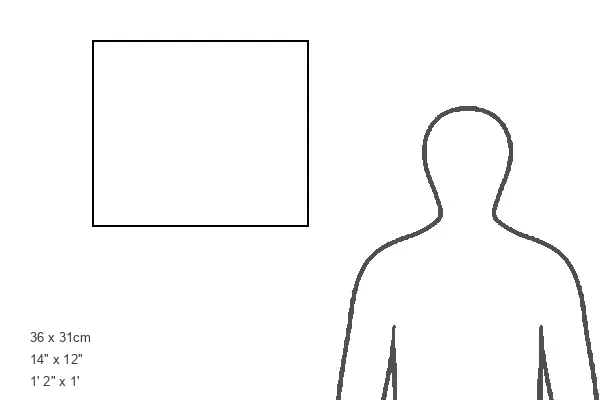
Modern Frame 14"x12" (36x31cm)
Ready to Hang Contemporary Framed Prints adds style, protection, and a polished touch to your space - effortlessly.
Your artwork will be printed as shown in the preview. To adjust please select Edit Printed Image under the Buy button
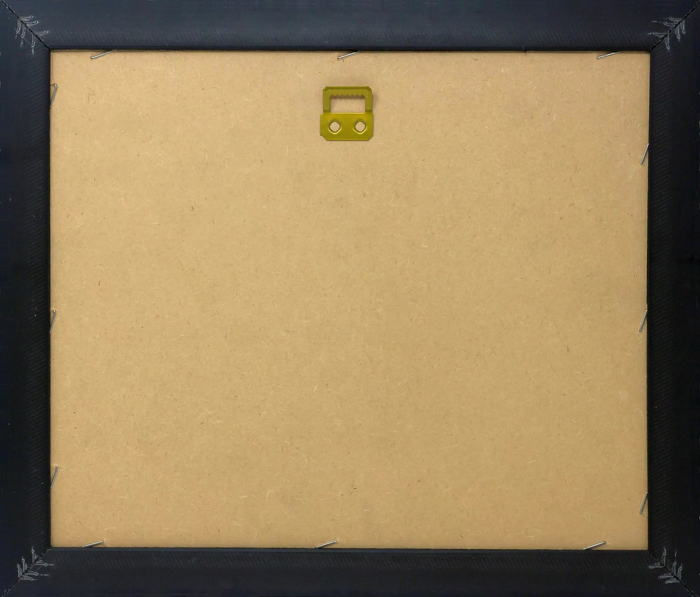
Wood effect frame, card mounted, 10x8 fade resistant photo print. Overall outside dimensions 14x12 inches (36x31cm). Environmentally and ozone friendly, 40mm wide x 15mm Polycore® moulding has the look of real wood, is durable and light and easy to hang. Biodegradable and made with non-chlorinated gases (no toxic fumes) it is efficient; producing 100 tons of polystyrene can save 300 tons of trees! Prints are glazed with lightweight, shatterproof, optical clarity acrylic (providing the same general protection from the environment as glass). The back is stapled hardboard with a sawtooth hanger attached. Note: measurements provided are estimated outer dimensions, which include both the image and the frame. While we aim to keep sizing consistent, exact dimensions may vary slightly due to differences in print size or production requirements, which may result in a variation in the overall size (up to approximately 2.5cm (1"))
These are individually made so all sizes are approximate
Estimated Image Size (if not cropped) is 24.4cm x 9.2cm (9.6" x 3.6")
Estimated Product Size is 36cm x 31cm (14.2" x 12.2")
Features In These Collections
> Europe > United Kingdom > England > London > Museums > National Army Museum